.png)


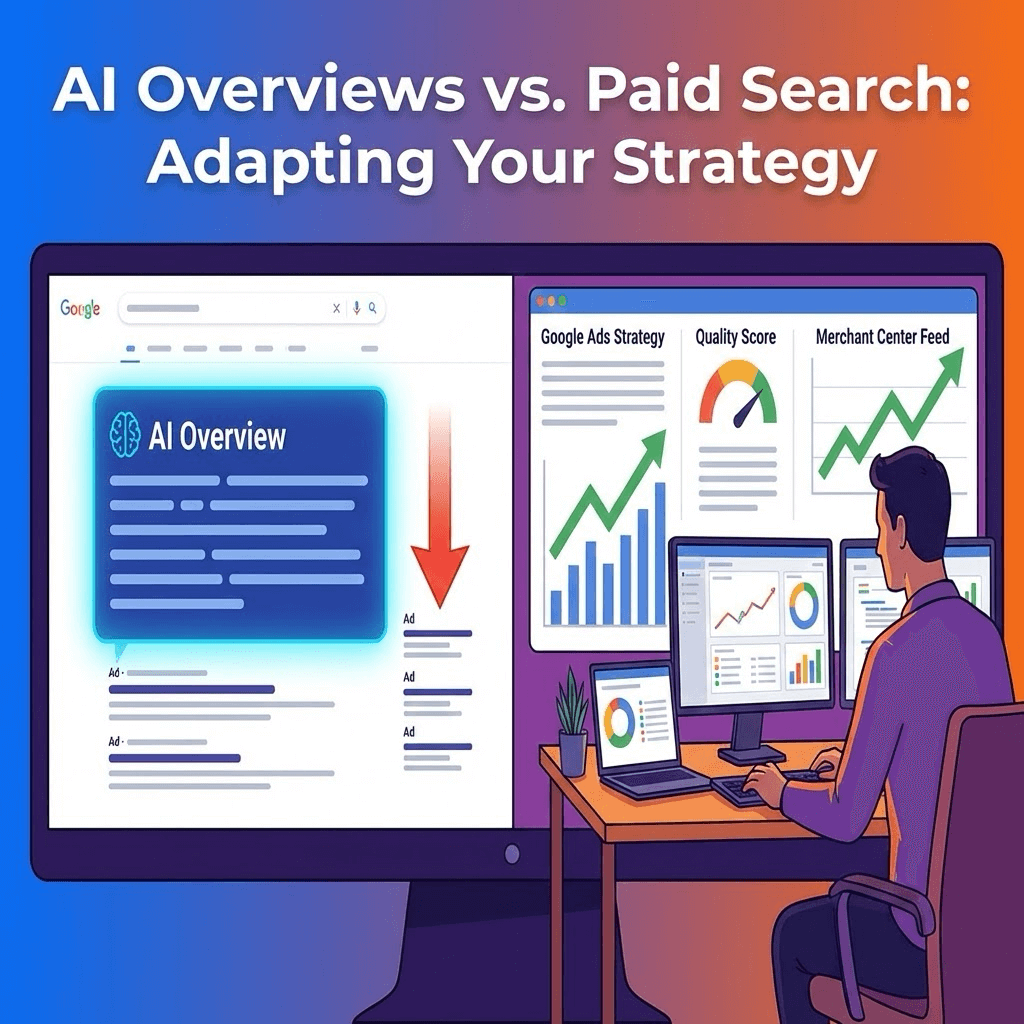
How AI Overviews Impact Paid Search
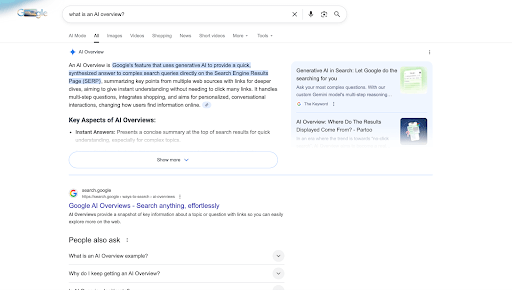
By now you’re familiar with the AI overview and how it’s altered the appearance of search engine results pages. In the pre-AI overview era, we typically saw either shopping listings or search ad listings at the top, followed by organic search results - now we may see an AI overview at the very top, followed by shopping listings or search listings - depending on the query. If we switch to AI mode we might find shopping listings in the AI Mode result if there is commercial intent in the query.
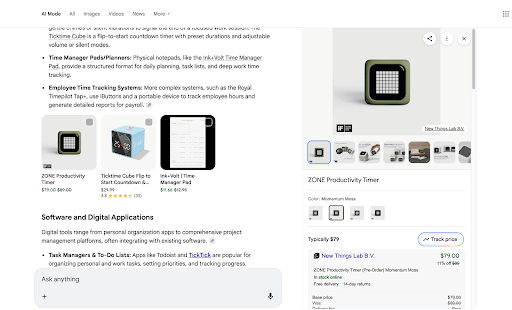
All this to say, AI Overviews have significantly altered the SERP and several key areas are impacted: Layout, Visibility and User Interaction.
Regarding layout and visibility, we’ve already shown how the AI overview pushes ads down and makes them less visible. This means there is a reduction in ads above the fold and competition is higher for those reduced spots. We’ve also seen an increase in cpcs that correlates with this change. When a user completes a search, the primary visible image contained within the AI Overview is the primary attention grabber - as opposed to paid ads. Ads on mobile devices are particularly at risk because of the lack of real estate on smaller screens.
User interaction is also heavily impacted by the introduction of AI overviews. We’ve seen reduced click through rates both as an impact of paid ads moving below the fold but also due to the rise of zero click searches. The AI overview aims to answer the user’s query without the need to click through. This, in turn, impacts both paid and organic traffic.
So - what can we do? Is paid search doomed? Well, it is difficult to say what will happen in the next five years, but there are things we can do to get your ad noticed in an increasingly crowded internet environment. These involve controlling the quality of the ads and data feed we have access to, maximizing quality score and exploring other networks besides search and shopping.
Having a high quality Google Merchant Center feed is our best option for getting your retail listings in AI Overviews or AI Mode. This is achieved through optimizing the feed attributes, using high quality images and utilizing product & company reviews through a third party review platform that is linked to Google Merchant Center. We also recommend optimizing Brand Profiles with GMC for additional benefit in the SERP.
There also are ways to get search ads above the AI Overview if the keywords that are being searched achieve a higher ad rank and quality score. We can look to improve quality score through hyper relevant ad groups, ads, and landing pages with fast load times. Ad rank is impacted by both quality score and bid. In some cases we will have to bid more aggressively to achieve a spot above the AI Overview.
Lastly, just because we’ve seen the AI Overviews have a massive impact on search pages, that doesn’t mean that other networks can’t be leveraged. Using image and video ads with audience targeting is a great way to get lower cost visibility to your website and show ads to people who may be interested in your product and searching for products like yours.
The rise of AI Overviews has undeniably reshaped the landscape of paid search by affecting SERP layout, ad visibility, and user interaction through the proliferation of zero-click searches. However, paid search is far from obsolete. By proactively focusing on high-quality data feeds through Google Merchant Center, aggressively optimizing for Quality Score and Ad Rank to secure top placements, and strategically exploring diversified ad networks like image and video, advertisers can adapt to this new environment. The key is not despair, but dedicated optimization and a willingness to leverage all available channels to ensure your brand maintains a strong, visible presence.
.jpg)